
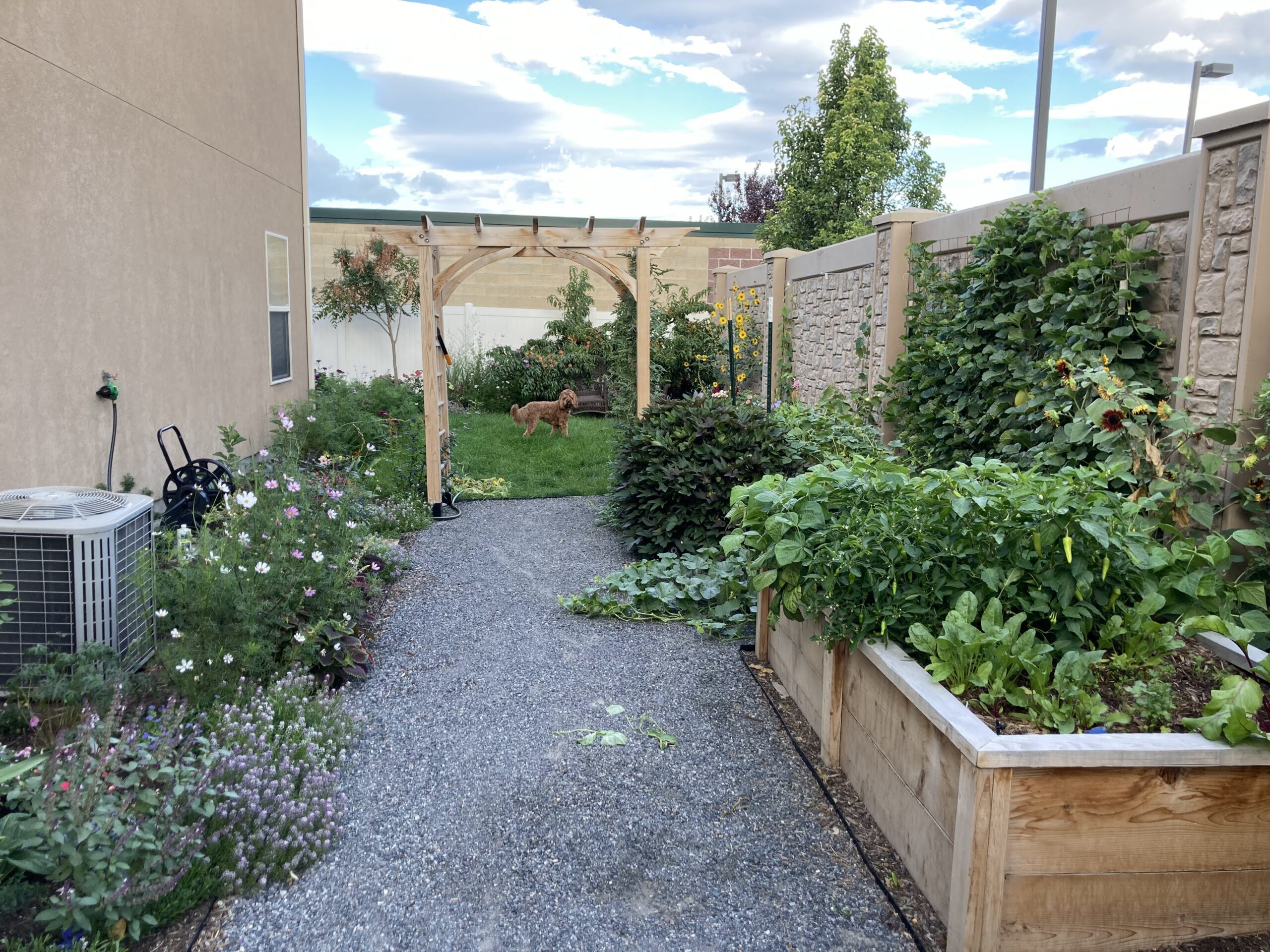
Everyone I talk to says they want a low-maintenance yard, but sometimes I get the feeling that when they say “low-maintenance,” they really mean “NO maintenance.” I’m sorry to say, there is no such thing as a NO maintenance yard. If you have an outdoor space, you’re going to have to spend some time, effort, and resources to maintain it. Even concrete is going to need some maintenance at some point. “Low-maintenance,” on the other hand, is actually really attainable. I’d even say that low-maintenance landscapes should be the default, not the upgrade.
So what makes a yard “low-maintenance?”
The first step in creating a low-maintenance landscape is to get your setup right. The right setup could save up to 80% of your routine maintenance. Start by getting a soil test done through your local extension office. That is going to give you some really crucial information about what you have to work with and what kinds of plants are going to thrive in your yard. It’s going to tell you what your soil type is, what the pH and salinity levels are, what kinds of amendments you might need to add. Once you have that information, plan out your beds. Use edging to separate grass, pathways, and planting beds to reduce weeding and maintaining those edges. Make a plan for how to get water to your plants, and the more you can automate it, the better. Drip irrigation is great, but even if you have overhead sprinklers, use a smart controller to run your irrigation system. Smart controllers take the guesswork out of things and make sure your plants get the right amount of water.
Once you’ve got the right setup, choose your plants. Choosing low-maintenance plants just means finding a plant that will thrive in the conditions you give it. Plants want to grow. Give them the right conditions and plant will take care of itself with very little help from you. Choose plants that are native, native-adjacent, or climate-adapted. That means that they have evolved to grow in your specific climate and will do great with the conditions that already exist. You aren’t going to need to give them a lot of extra water, or protect them from a bunch of pests, or try to shade them or get them more light, or protect them from the cold or heat. They’re already used to all that stuff and they’ll just grow happily on their own. You also need to be aware of the mature size and shape of the plant and choose plants that are going to keep a good size and shape without help from you. All plants look little and cute when you first buy them, but some plants stay that way and some turn into giant monsters that take over everything around them. Do some research on the plants, look at the tags, and make sure that plant will stay a size and shape that you can live with for years to come.
Side note: Flowers are wonderful and amazing, but they also are generally a lot more work. Most plants only flower for a short amount of time before they go to seed, which means that they aren’t going to look as nice and you’re going to have to cut them down or deadhead them or just be okay with them looking a little sad. For a lot of people, the flowers are worth it. For others, it might be better just to go with greenery that doesn’t require all that maintenance.
Okay, so your beds are all planted, now what? Start a maintenance routine! Once a week or so, take some time to walk around your yard and just pay attention to how your plants are doing. If you see a weed pop up, pull it out. If a plant looks stressed, check the irrigation system to make sure it’s working and look for pests or disease. A quick walk around your yard will probably only take a few minutes, but that routine is crucial to make sure problems don’t get out of hand. It’s no problem to pull one or two little weeds here and there. It’s a big deal to have to try to hack back a jungle of weeds that have taken over your flower bed because you forgot to go out.
Low-maintenance is just a different kind of maintenance. It’s more about working as a partnership with nature to allow it to thrive. Not only is it less work, it’s also a lot more enjoyable. If you’d like help creating your own low-maintenance landscape, schedule an appointment with us and we’d be happy to help!